
2025 brought significant challenges for the oral health system in the US, deepening what many already believe is a crisis. About 72 million Americans lack dental insurance today. State-level decisions to eliminate community water fluoridation threatened access and prevention efforts. And federal cuts to Medicaid will jeopardize dental benefits for millions in the coming years.
Despite these setbacks, CareQuest Institute and its partners remain committed to meeting these challenges and advocating for a stronger, more equitable oral health system. Together, we continue to drive change, advance equity, and broadcast the voices of many individuals who work every day to improve the oral health system.
Below are nine quotes from 2025 that capture these challenges, the progress made, and the vision for the future:
- “We are already facing an oral health crisis. Medicaid cuts and water fluoridation rollbacks are the two biggest ways in which the oral health crisis is likely to be exacerbated.”
— Melissa Burroughs, Senior Public Policy Director, CareQuest Institute, in TIME Magazine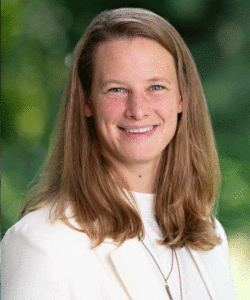
Melissa Burroughs
In a TIME Magazine article, dentists and experts, including Burroughs, say they’re worried that a perfect storm of public policy changes could further worsen oral health across the country. With the federal government making cuts to Medicaid, fewer people will be able to access dental care. On top of that, the federal government eliminated the Division of Oral Health at the US Centers for Disease Control and Prevention (CDC), and states including Florida and Utah banned the addition of fluoride to drinking water, with other states considering similar bans. Dentists say the oral health of children and adults will suffer.
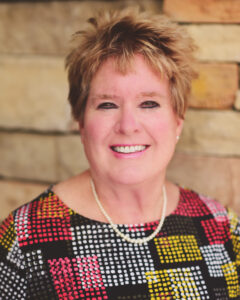
Lisa Platt
- “They’ve done so much for us. Why aren’t we taking care of them?”
— Lisa Platt, Executive Director, Mercy Foundation
Out of the 9 million veterans who are eligible for medical care through the US Department of Veterans Affairs, 80% are not eligible for dental coverage or care. Oregon’s Mercy Foundation, one of 10 CareQuest Institute grantees awarded $125,000 to improve veterans’ access to oral health care, used the funds to support their inpatient dental program at Mercy Medical Center.
- “I wish I could see every kid by age 1, but there are still a lot of kids at age 1 who are getting a lot of cavities.”
— Jessica Robertson, DMD, Board-Certified Pediatric Dentist, Around the Mountain Pediatric Dentistry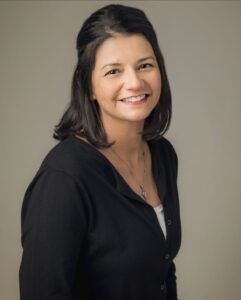
Jessica Robertson, DMD
Robertson served as an expert panelist on CareQuest Institute’s webinar “Starting Strong: The Importance of the Age One Dental Visit,” where she shared why dental visits at age 1 are critical to promoting oral health and minimizing the risk of early childhood caries. As a dentist in a rural area, she says the biggest barriers to oral health care for her patients are food deserts. Many patients have to travel far distances to get to a grocery store once a month and settle for processed food.
- “I think it’s time for all aspects of dentistry to be included in essential health.”
— Brett Kessler, DDS, Former President, American Dental Association
In the past few years, oral health has moved from the sidelines at HLTH to its rightful place as a key part of its programming. HLTH is an annual event where industry leaders gather to explore innovative trends and technologies. CareQuest Innovation Partners, a for-profit subsidiary company of CareQuest Institute, hosted an Oral Health Pavilion at the event to demonstrate what connected care looks like, with A1C, saliva, and blood pressure testing. During the panel sessions, experts discussed the importance of medical-dental integration and why it is one of the strongest opportunities to advance prevention of tooth decay and early detection of chronic diseases.
- “We see the youth as Generation 2.0 that really need to see firsthand the prevention and the support that is needed in the community.”
— Hibo Omer, Executive Director, New Mainers Public Health Initiative (NMPHI)
In Maine, several dental practices and clinics have shut down, leaving many without a dental home. With the help of a CareQuest Institute grant, NMPHI engaged junior community health workers to help individuals in their communities access and learn about oral health, specifically about oral hygiene and how to get dental insurance.
- “I see it as an opportunity to improve integrated care and make a positive impact in the health outcomes for patients in critical condition.”
— Michelle Gross-Panico, Clinical Program Research and Development Manager and ICU Project Director, Dignity Health
Michelle Gross-Panico
In 2019, Dignity Health launched a grant-funded pilot program to address oral care for patients in the intensive care unit (ICU) at Dignity Health Chandler Regional Medical Center. Through the program, the organization embedded five critical care dental hygienists into the Medical and Trauma ICUs. Going strong five years later, the organization received a grant from CareQuest Institute to work toward bringing their model to the larger health care system, both state- and nationwide. The funding allowed the organization to conduct a study to evaluate changes in patient oral conditions, assess the interprofessional care model, and complete a cost analysis.
- “Recent wins in Louisiana and Connecticut demonstrate that a united stakeholder front, evidence-based data, and local engagement can protect access to fluoride, regardless of the political environment.”
— Matthew Steele, Director of State and Local Advocacy, CareQuest Institute
Matthew Steele
Despite community water fluoridation (CWF) being a safe and effective public health measure that has helped reduce tooth decay for decades, more than 20 states introduced legislation this year aimed at restricting — or outright banning — CWF. The issue of CWF has become increasingly politicized in those 20 states and many others.
At a time when state-level decisions increasingly determine local health outcomes, wins in Louisiana and Connecticut offered timely and informative case studies. As threats to fluoride continue to emerge across the country, the case studies will provide a blueprint for how to defend and strengthen community water fluoridation.
- “Being surrounded by people who truly care about this issue made me feel seen and part of a larger community. That sense of belonging is what stays with me from Hill Day — to know that there are people with the same vision as me was powerful.”
— India Washington, MHS, CPH, Master’s Student, Johns Hopkins Bloomberg School of Public Health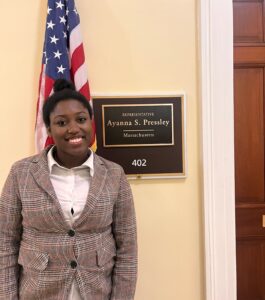
India Washington, MPH, CPH
OPEN Hill Day brought more than 90 members, including Washington, from across the US to Capitol Hill to meet with legislators about prioritizing oral health in their communities. At the event, she joined other OPEN members to ask legislators to (1) oppose Medicaid cuts that would jeopardize access to dental care for millions of people, (2) improve access to dental care for veterans who get medical care from the VA, and (3) support the HEADs UP Act, which would designate people with intellectual and developmental disabilities as a medically underserved population and increase their access to oral health care.
- “Whether it’s advocating for coverage, investing in innovative care delivery models, or supporting our health professionals on the front lines, expanding affordable and available access to oral health care is the game changer. It’s the key to unlocking better outcomes for millions.”
— Wade Rakes, MBA, CEO, CareQuest Institute
Wade Rakes, MBA
As the new CEO of CareQuest Institute, Rakes will lead an organization dedicated to transforming oral health access and outcomes for underserved populations across the US. Rakes answered eight questions about himself and his vision for the future of CareQuest Institute.