
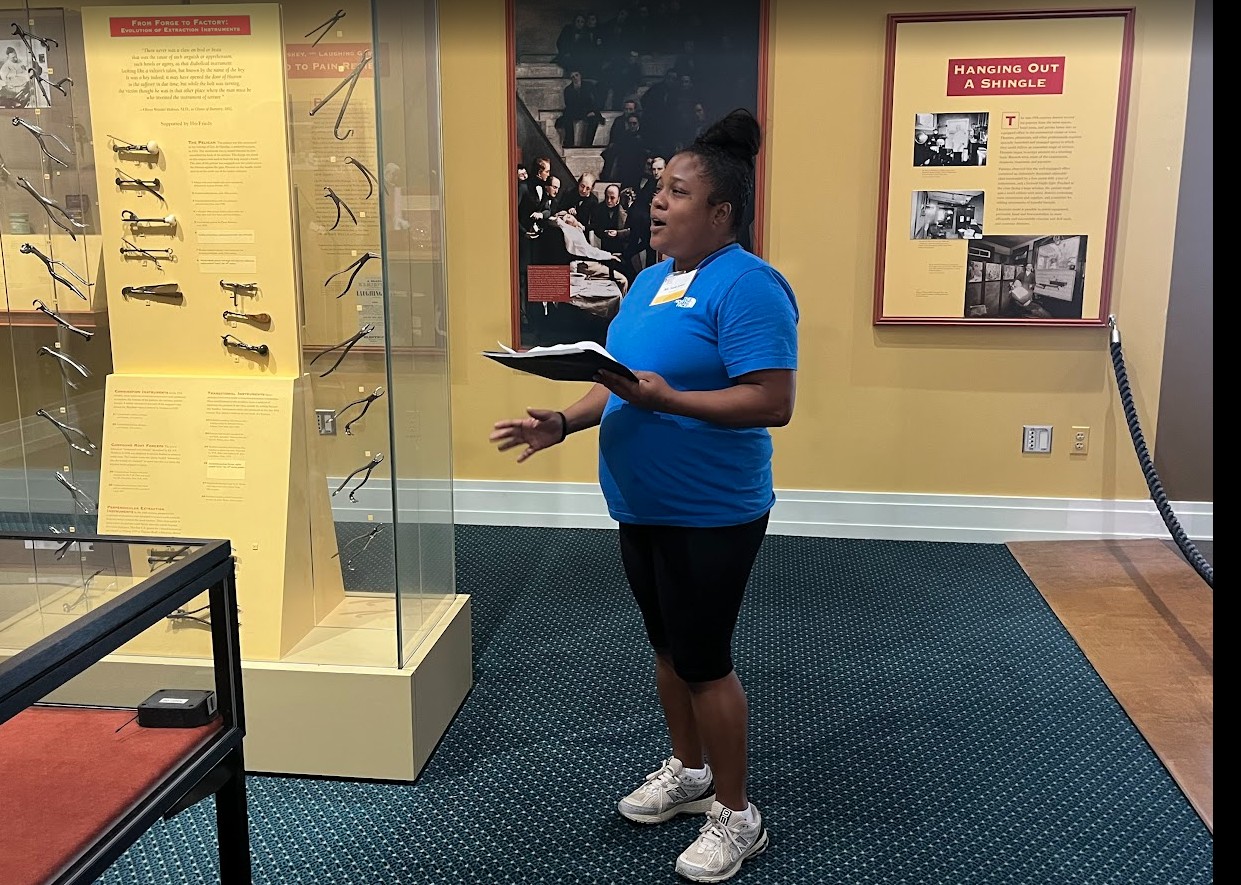
Sade Jones
Sade Jones knows what it’s like to feel helpless in a dental chair — especially at eight months pregnant.
“I was getting work done, and my teeth were hurting really badly,” she says. “I didn’t say anything at first, but after a while, it started hurting more, and I spoke up.”
The dental provider continued the procedure anyway. To this day, Jones is living with the consequences of not being heard.
“The problem was still there,” she says. “It actually caused my teeth to come out after a while.”
That experience would later shape her decision to speak up — not just for herself but for others in her position.
Jones decided to join the Prenatal and Postpartum Advisory Board (PPAB) of the University of Maryland School of Dentistry (UMSOD). The PPAB is a diverse group including moms with lived experiences, committed to expanding dental care access for underserved pregnant and postpartum people.
“That was something that I really wanted to be a part of because I had my own experience, and they actually wanted to hear from me,” she says.
Jones’s experience is not unique, and it’s exactly why the UMSOD created the PPAB.
Originally, the PPAB helped strengthen Medicaid dental coverage for prenatal and postpartum people in the state. Over the years, the PPAB grew into a broader program that integrates maternal oral health education into dental hygiene programs. The University of Maryland Baltimore Institute for Clinical and Translational Science and the ADEAGies Foundation initially supported the work. The program later expanded, through support from CareQuest Institute, to include community health worker (CHW) trainings and address the state’s ongoing workforce shortage. Since 2021, the Institute has provided more than $600,000 in grant funding to support PPAB’s work.
“We’re very happy to see this evolution and impact of this work over the years,” says CareQuest Institute Senior Grants Officer John Gabelus. “What began as an effort to listen to community voices has grown into something far more powerful, with those voices now shaping solutions and filling key gaps in our oral health system.”
Bringing Pregnant Patient Voices to the Table
For many pregnant and postpartum people, dental care comes with a lot of uncertainty. What’s safe during pregnancy? What questions should you ask your providers? And will anyone listen if something doesn’t feel right?
That uncertainty keeps many people from getting care at all — even though poor oral health during pregnancy has been linked to preeclampsia, preterm birth, and low-birth-weight infants.
A CareQuest Institute study found that fewer than half of pregnant people received dental care during their pregnancy. Further, only one third (35%) of obstetricians and nurse midwives said they discussed oral health with their pregnant patients. Even more concerning, 77% of obstetricians reported that some of their patients had been turned away by dentists — despite dental care being safe during pregnancy. (Learn more about how oral health teams can collaborate effectively with prenatal and pediatric care providers to improve access, safety, and continuity of care in our webinar, “Oral Health from Pregnancy to Early Childhood.”)
In the Baltimore area and surrounding counties, pregnant and postpartum people face additional barriers to accessing care.
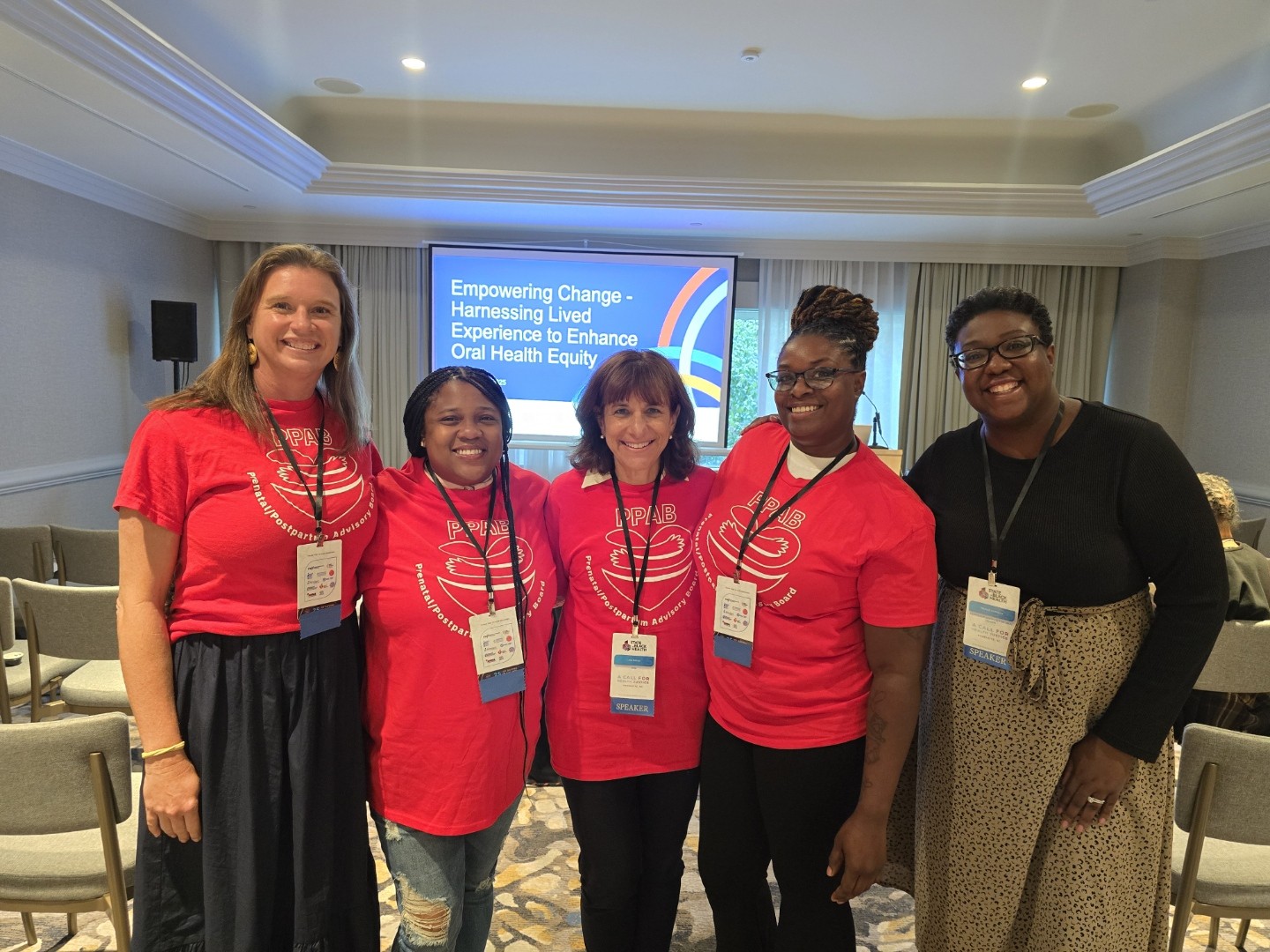
The PPAB conducts a panel discussion moderated by CareQuest Institute Senior Director of Philanthropy Trenae Simpson at the 2025 State of Black Health Conference.
“This community is a Dental Health Professional Shortage Area,” says Lisa Bress, RDH, MS, Clinical Associate Professor at UMSOD. “And most of the prenatal and postpartum patients, at least at this clinic, rely on Medicaid, and it’s not always easy to get a provider who accepts it.”
The PPAB is made up of 10–12 individuals: prenatal providers, oral health providers, public health professionals, and prenatal and postpartum mothers who have personally faced oral health inequities. They meet a few times virtually and, occasionally, in person every year. Together, they examine the barriers to care and examine opportunities for better integration of care and improved access.
“The relationships among advisory board members developed in the first year,” Bress says. “Then, in the second year, we went out into the community.”
From Board Member to Educator
For Jones, being heard on the advisory board was only the beginning.
Through her involvement with the board, she found a path to turn her lived experience into action — first as a certified CHW, educating prenatal and postpartum people about oral health and linking them to a dental home.
“I share my own experience with them, and a lot of them are scared to talk because they experience the same thing,” she says.
As a CHW, Jones educates prenatal and postpartum patients at two University of Maryland Women’s Health Center clinics and is integrated into dental hygiene oral health literacy courses to help dental hygiene students learn effective communication techniques with their patients.
“I talk about what it feels like to be in the chair and why patients don’t always say something — even when it hurts,” Jones says.
Those words often spur action. Just a few weeks ago, Jones called Bress advocating for a pregnant patient who was in urgent need of oral health care.
“Sade would not let up until we got this poor girl in the chair,” Bress says. “I saw the patient at the clinic — she had her pajamas on, was 23 weeks pregnant, covering her mouth with her hood up because she was in so much pain. I read the chart afterward, and the dental student had started a root canal, which addressed the pain and saved the tooth.”
By hearing directly from someone who has been on the other side of care, dental hygiene students and dental providers get the opportunity to think differently about trust, communication, and their role in supporting pregnant and postpartum patients — particularly those who face barriers to care.
“So this is a win-win situation,” Bress says. “You have a student being educated and a patient getting the care she needs, care that could make a life‑changing difference.”
Both Jones and Bress are continuing to raise awareness about the importance of oral health care among dental hygiene students at other universities, CHWs, and expecting mothers. Most recently, they went to the Howard University Pediatric Dentistry Department in Washington, DC, to talk about how students can emphasize the importance of oral health to patients to improve health outcomes.
Moving forward, the PPAB will continue integrating oral health education into CHW training — helping ensure pregnant and postpartum people have the information, support, and confidence they need to access care and speak up for themselves.
“I want to expand our impact,” Jones says. “And continue advocating for patients so their voices are heard.”