
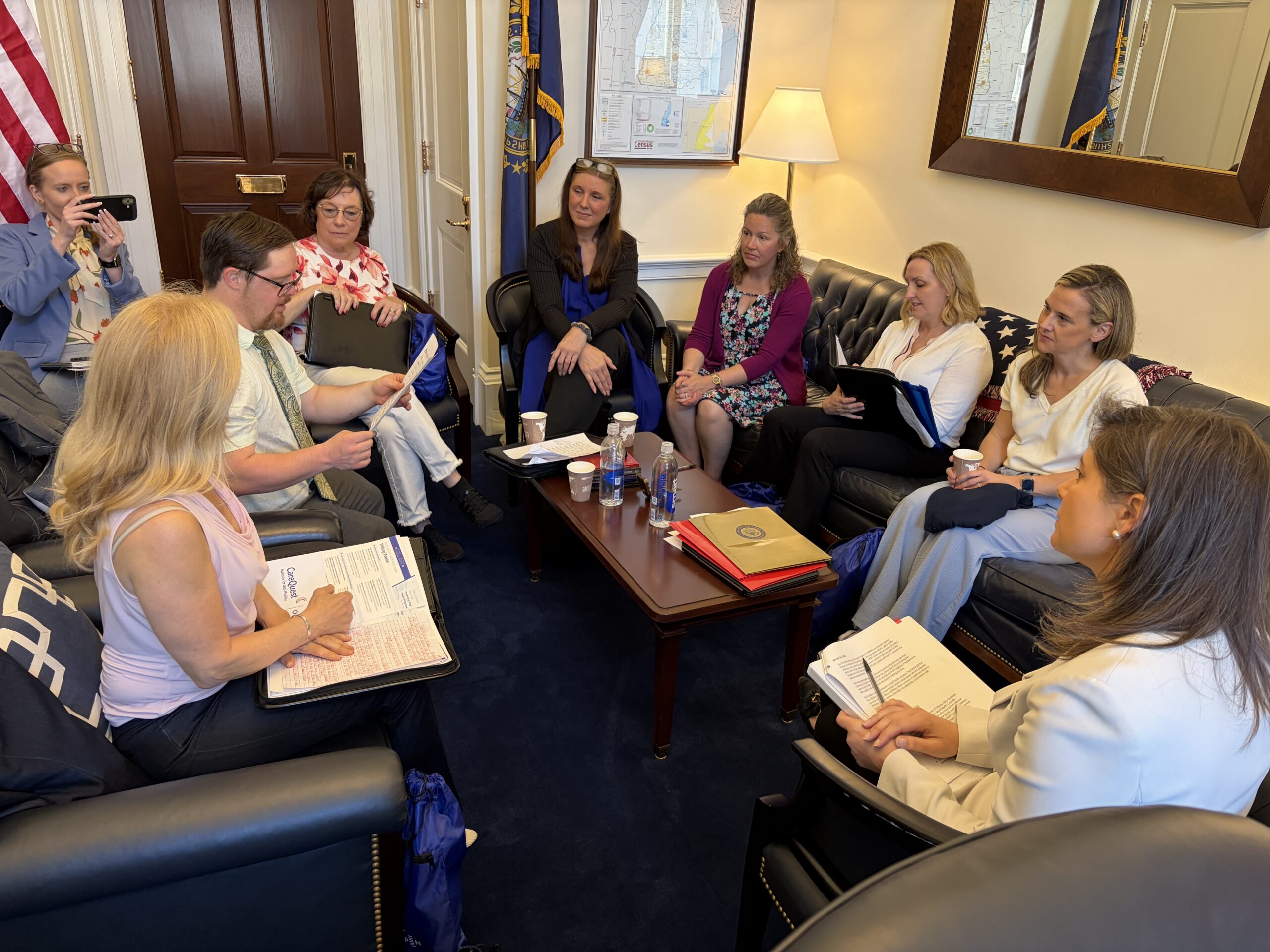
Seven OPEN advocates from New Hampshire meet with Representative Maggie Goodlander (NH-2)
More than 130 advocates from across the country gathered in Washington, DC, on June 4 for OPEN Hill Day with one purpose: to meet with their state legislators and push for policies that prioritize oral health in their communities.
“OPEN is a great place to connect with providers and experts in oral health care,” says Kelsey Arends with Nebraska Appleseed, a nonprofit organization that fights for justice and opportunity for all Nebraskans. “We’ve benefitted from that in our state, and it’s helpful to come here and meet with folks from other states, too.”
OPEN is a diverse network of people and organizations who use their unique experiences, knowledge, and skills to make oral health care more affordable and accessible — especially for underserved populations. Members connect in person and virtually throughout the year to share resources, learn from one another, and align on policy priorities. Each year, including this one, that collaboration culminates at OPEN Hill Day on Capitol Hill.
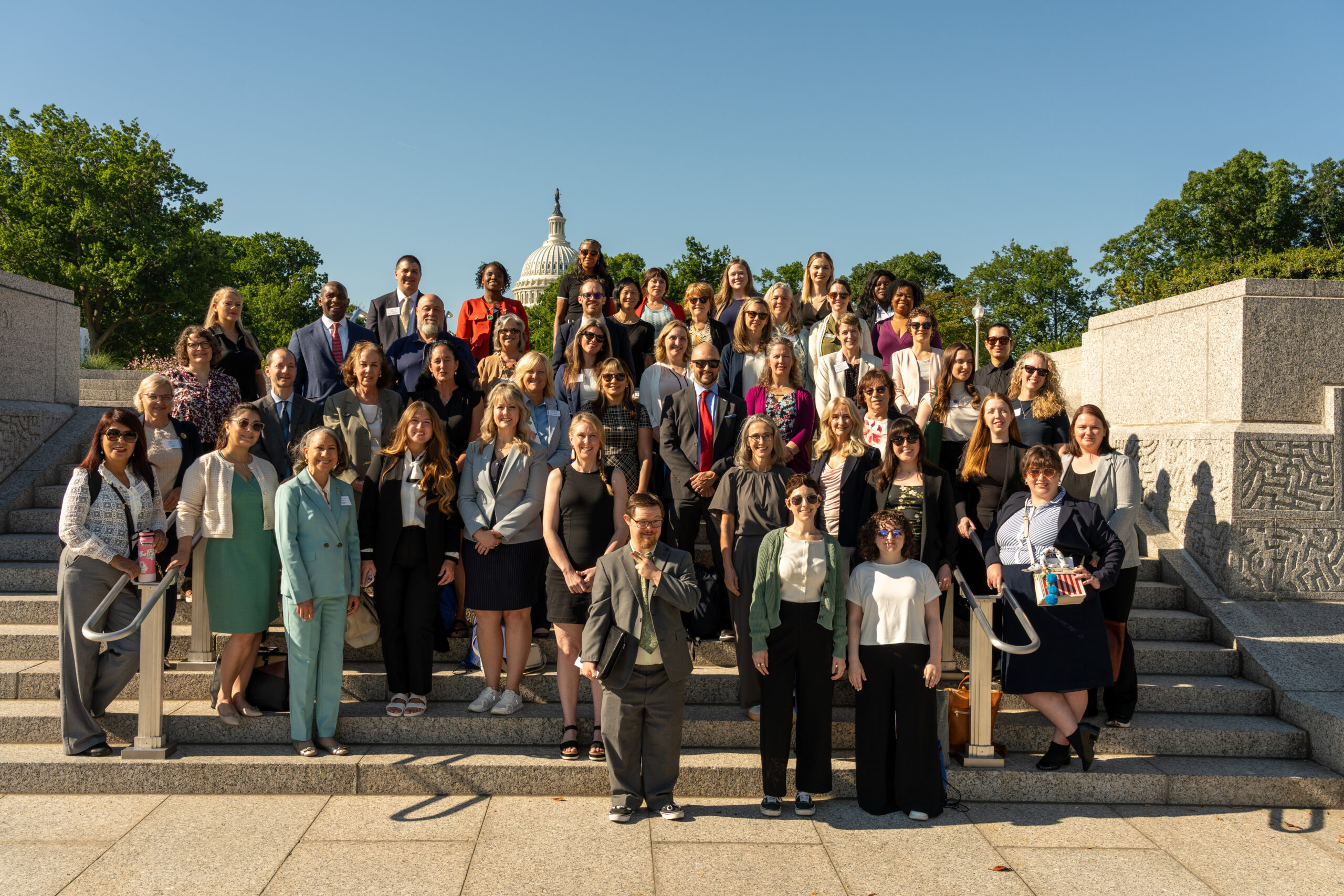
OPEN members in front of Capitol Hill
This was OPEN’s fifth Hill Day. And this year — on a day filled with 130 advocates, 138 meetings, and the recognition of a policymaker who is championing oral health — collaboration was front and center.
“This year’s OPEN Hill Day highlighted what makes this work effective — collaboration grounded in community voice, a shared vision, and multiple perspectives,” says Trenae Simpson, CareQuest Institute Senior Director of Philanthropy. “That foundation allows us to shape policy in ways that reflect real needs and drive the systems change required to expand access to oral health care.”
Preparing to Advocate on Capitol Hill
In the weeks leading up to Hill Day, before heading into meetings with lawmakers, OPEN members participated in trainings and discussions led by CareQuest team members and policy experts. The trainings helped the advocates make the most of their limited time with policymakers on Capitol Hill.
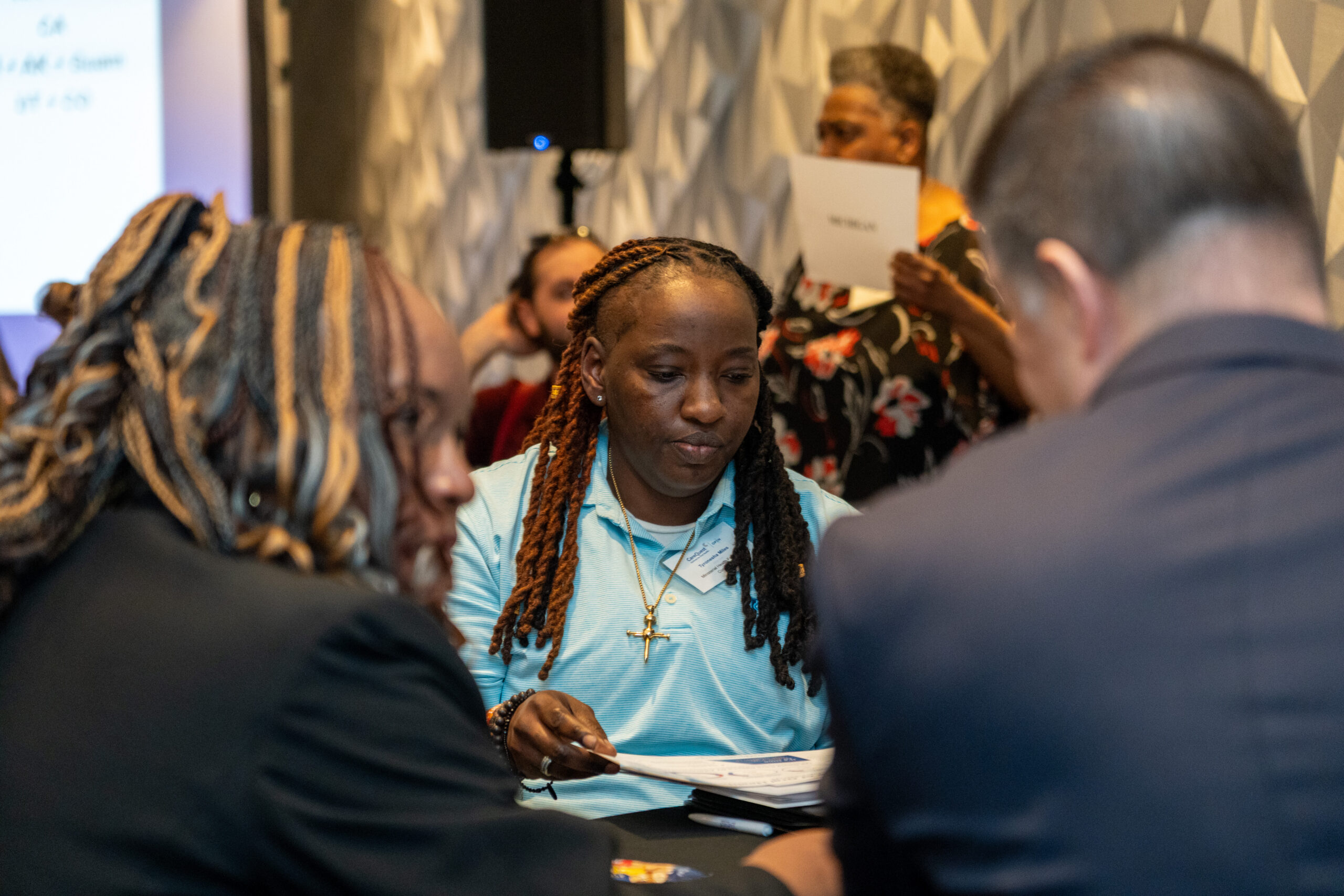
OPEN members participate in Hill Day training
“We had some wonderful panels where we got to hear about how to get the most out of our meetings,” says Emma Vann with Healthy Mothers, Healthy Babies Coalition of Georgia, a nonprofit organization that tries to improve maternal and infant health through advocacy, education, and access to vital resources. “The role play was the most helpful. Not only did it bring some lightheartedness to the situation, but it really helped to portray what our meetings were going to look like.”
Advocates also reviewed state-specific data compiled by CareQuest Institute, highlighting how improving access to oral health care can reduce costs and improve overall health outcomes in their communities.
“The Health Data Exchange is very beneficial in getting specific state resources when it comes to numbers — because we all know people in government want to see numbers,” says Summer McMenamin, RDH, MS, FADHA, MCHES, a member of the Delaware Dental Hygienists’ Association.
Equipped with both data and personal stories, they headed into meetings ready to make their case.
This year’s OPEN Hill Day focused on three key priorities:
- Improving access to dental care for veterans: The majority of veterans do not qualify for VA dental benefits, and those who do often face provider shortages, geographic barriers, and high out-of-pocket costs, placing them at greater risk for chronic conditions and financial strain.
- Protecting Medicaid as a critical pathway to care: Proposed changes under the One Big Beautiful Bill Act could unintentionally limit access to dental services, leading to increased emergency room use and higher system-wide health care costs.
- Ensuring sustained federal investment in oral health infrastructure and prevention: Recent federal rollbacks include the elimination of the CDC’s Division of Oral Health, which administers grants to fund states’ oral health programs.
Oral Health Advocacy Is Personal
While data and policy priorities shape the conversations, the motivation behind advocacy can be deeply personal.
For McMenamin, her commitment to oral health access is rooted in her father’s experience.
![Office Scene with Three Adults Seated on Black Leather Sofas, a Wooden Coffee Table, and an American Flag in the Corner.] , but Not Allowed I Need to Fix.](https://carequest.org/wp-content/uploads/2026/06/IMG_3443-scaled.jpeg "IMG_3443 – CareQuest Institute")
Jandra Korb, DDS, speaks with Representative Josh Brecheen’s (OK-2 aides
“My father had no teeth and wore dentures, and that affected his mental health and overall well-being,” she says. “When he went through cancer treatments, the oral health complications became so severe that he eventually needed a feeding tube because he could no longer wear his dentures to eat.”
For others, their advocacy is shaped by lived experience navigating the health care system.
“I’m a disabled American veteran myself,” says Kevin Miller with Disabled American Veterans, a nonprofit that provides support for veterans. “I’ve had to pay out of pocket for dental care, which can be prohibitively expensive. At times, I’ve even been refused treatment because I couldn’t afford it.”
And for many, showing up is about using their voice to support others.
“I find joy in bringing my voice to the table to shine a light on some of our most important public health issues here in the US,” Vann says.
Educating Lawmakers about Oral Health
Throughout the day, advocates met with dozens of members of Congress from both sides of the political aisle, bringing oral health to the forefront of conversations on Capitol Hill.
“It was encouraging to hear that many of the folks we met with regardless of political ideology were interested in what we had to say,” says Saumya Ayyagari, RN, MSN, MPH, with Special Outreach Services, a free preventive oral health care program for people with intellectual disabilities in Pennsylvania. “It was great to educate our lawmakers about why oral health is health.”
Many advocates said the meetings were productive and reinforced the importance of continuing to elevate oral health as a national priority.
“Senator [Raphael] Warnock has always been a large supporter of these issues,” Vann says. “It was a very positive meeting, and we were all on the same page about how important oral health is to everyone’s health and how it’s connected to everything.”
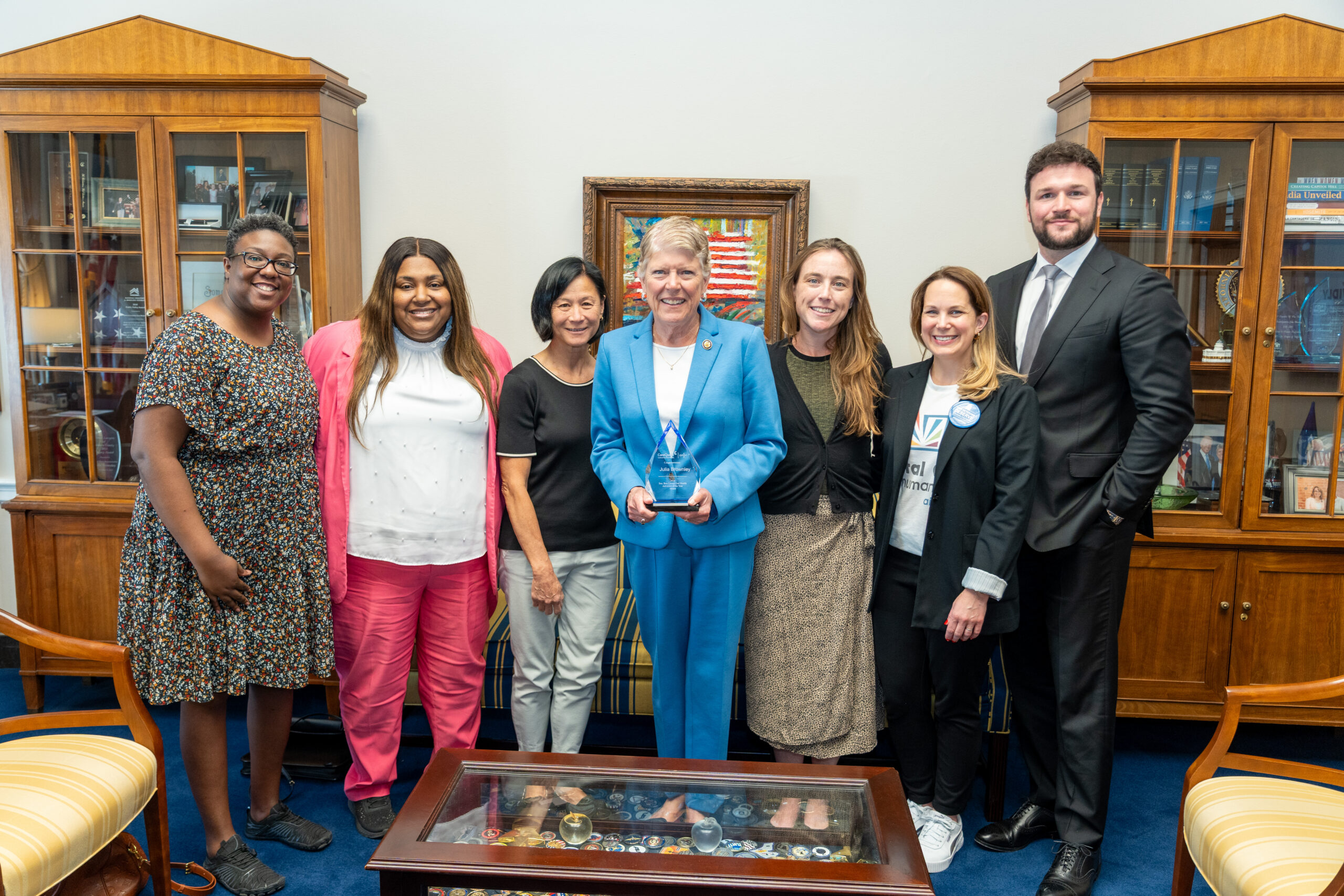
Representative Julia Brownley (CA-26) is recognized as OPEN Oral Health Champion of the Year
The day also included a moment of recognition for leadership in advancing oral health. Congresswoman Julia Brownley (CA-26) was named the 2026 Oral Health Champion of the Year for her work to expand access to dental care — particularly for veterans through the Dental Care for Veterans Act — and for supporting the integration of oral health and overall health.
For many advocates, the work doesn’t end when Hill Day concludes. Some are already planning follow-up conversations to continue building relationships with their legislators.
“Our conversation with Representative [Cliff] Bentz (OR-2) was very fruitful,” says Laura McKeane, an oral health advocate. “He asked for specific data points, so we have a mission to provide that as soon as possible. We’re hopeful he’ll be a champion for these issues moving forward.”
At the same time, participants reflected on the broader significance of showing up and speaking out.
“Doing something like this always reminds you that there’s so much going on,” says Margaret Master with Healthy Mothers, Healthy Babies Coalition of Georgia. “While it may seem obvious that veterans and families should have oral health coverage, it often takes someone sharing their story to show why it matters — and why action is needed.”
Editor’s Note: For more information on OPEN and OPEN Hill Day, go to carequest.org/policy-advocacy/open/.