
Patient premedication can be one of the biggest areas of uncertainty in dentistry when patients have complex medical histories or receive conflicting recommendations from other providers. Oral health providers must balance short-term patient safety with long-term responsible antimicrobial stewardship. These decisions elicit many questions and “what-ifs,” a reality underscored in the June 25 webinar, “Antibiotic Prophylaxis in Dental Care: Practical Guidance for Premedication Decisions,” from CareQuest Institute and the American Academy of Oral Medicine.
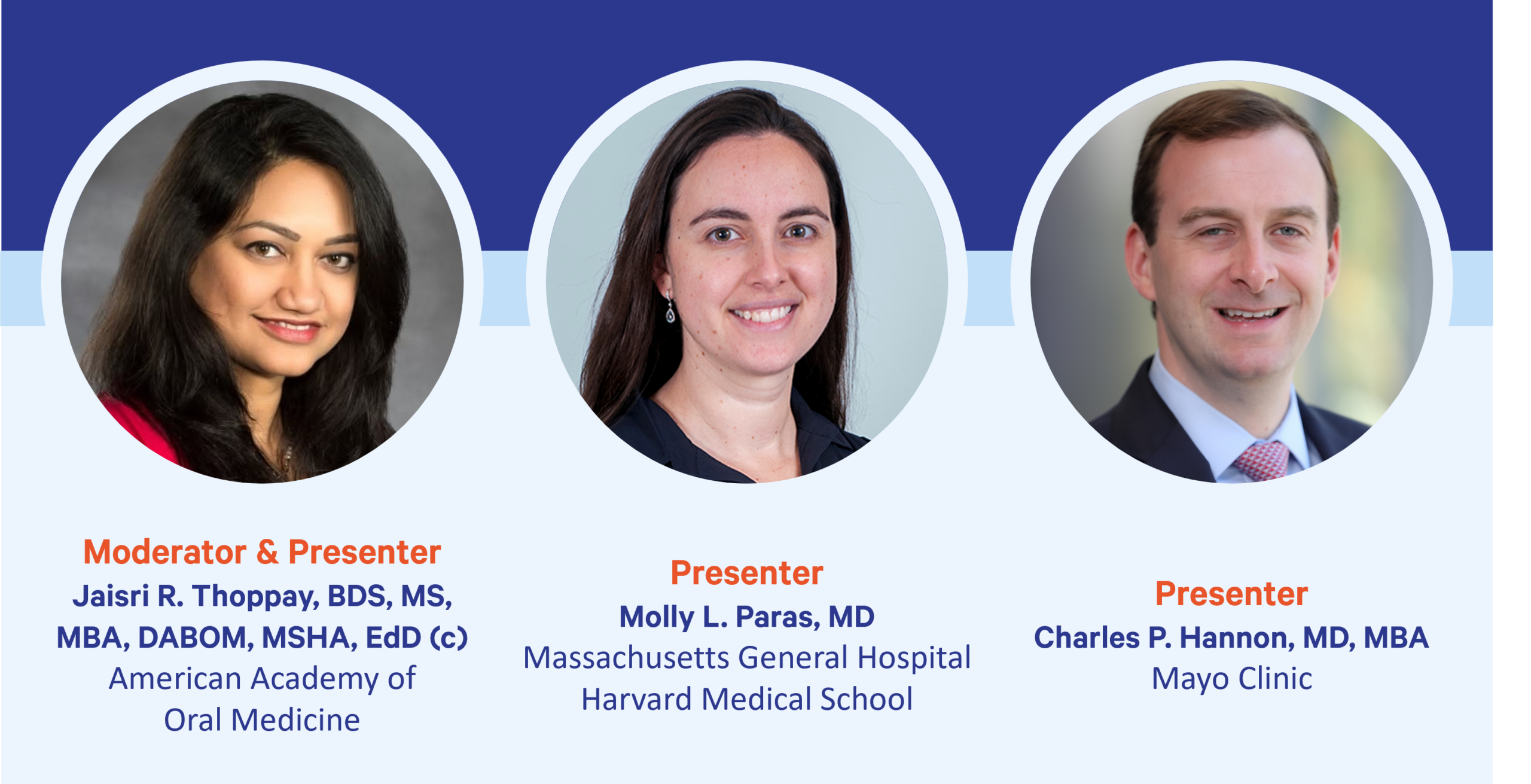
Experts from “Antibiotic Prophylaxis in Dental Care: Practical Guidance for Premedication Decisions” webinar
During the one-hour session, approximately 900 dentists, dental hygienists, dental assistants, and other health professionals joined the call, asking more than 90 questions to the three experts.
“Whether a clinician prescribes antibiotic prophylaxis that no longer meets evidence-based criteria, or omits it in a patient who genuinely needs it, the result is the same: compromised patient safety and meaningful medico-legal and ethical exposure,” says Jaisri R. Thoppay, BDS, MS, MBA, DABOM, MSHA, EdD(c).
Below, we’ve highlighted some of the most common questions and key insights shared by the speakers. For complete recommendations and patient-specific guidance, please consult the latest clinical guidelines from the American Dental Association (ADA), American Heart Association (AHA), and American Academy of Orthopaedic Surgeons (AAOS).
- How do I know if a patient needs antibiotic prophylaxis when they fall into a gray area not addressed by the guidelines?
Overprescribing antibiotics carries real risks and should be avoided. In gray-area cases, clinicians should consider the patient’s medical history, underlying conditions, medications, and overall risk profile. When needed, oral health providers should collaborate with the patient’s medical team.
- What should oral health providers do if a physician or surgeon recommends antibiotic prophylaxis that does not align with current guidelines?

Oral health providers should have open, collaborative conversations with the patient’s physician or surgeon to discuss the current evidence and guidelines. If the medical provider continues to recommend antibiotic prophylaxis after the discussion, they should assume responsibility for prescribing the medication.
- Do patients with hip or knee replacements still need antibiotic prophylaxis before dental procedures?
Routine antibiotic prophylaxis is no longer recommended for otherwise healthy patients with prosthetic joint replacements. For medically complex patients, decisions should be on a case-by-case basis through collaboration with the patient’s orthopedic surgeon and care team.
- What if a patient forgets to take their antibiotic prophylaxis before the dental appointment?
If the pre-procedure dose is inadvertently missed, the ADA states that the recommended dose may be administered up to 2 hours after the procedure. This is intended as backup rather than routine practice.
- Can probiotics, prebiotics, or postbiotics reduce the risk of C. difficile infection after a patient takes antibiotics?
There is no strong, consistent data showing that probiotics prevent C. difficile infection. Probiotic products vary widely in strains, formulations, and quality, making it difficult to know which products may be effective.
- If a patient is immunocompromised, should they take antibiotic prophylaxis prior to dental procedures?
Guidelines do not specifically address immunocompromised hosts and the need for antibiotic prophylaxis. Clinicians should consider the underlying condition or medication causing the immunocompromised state. Diseases such as leukemia or potent immunosuppressive therapy would place patients at higher risk than those with well-controlled diabetes or low-dose corticosteroid use. Clinicians should coordinate with the patient’s medical team.
Editor’s Note: To view the full webinar, including the recording and the PowerPoint slides, visit the CareQuest Institute webinar recording library.