
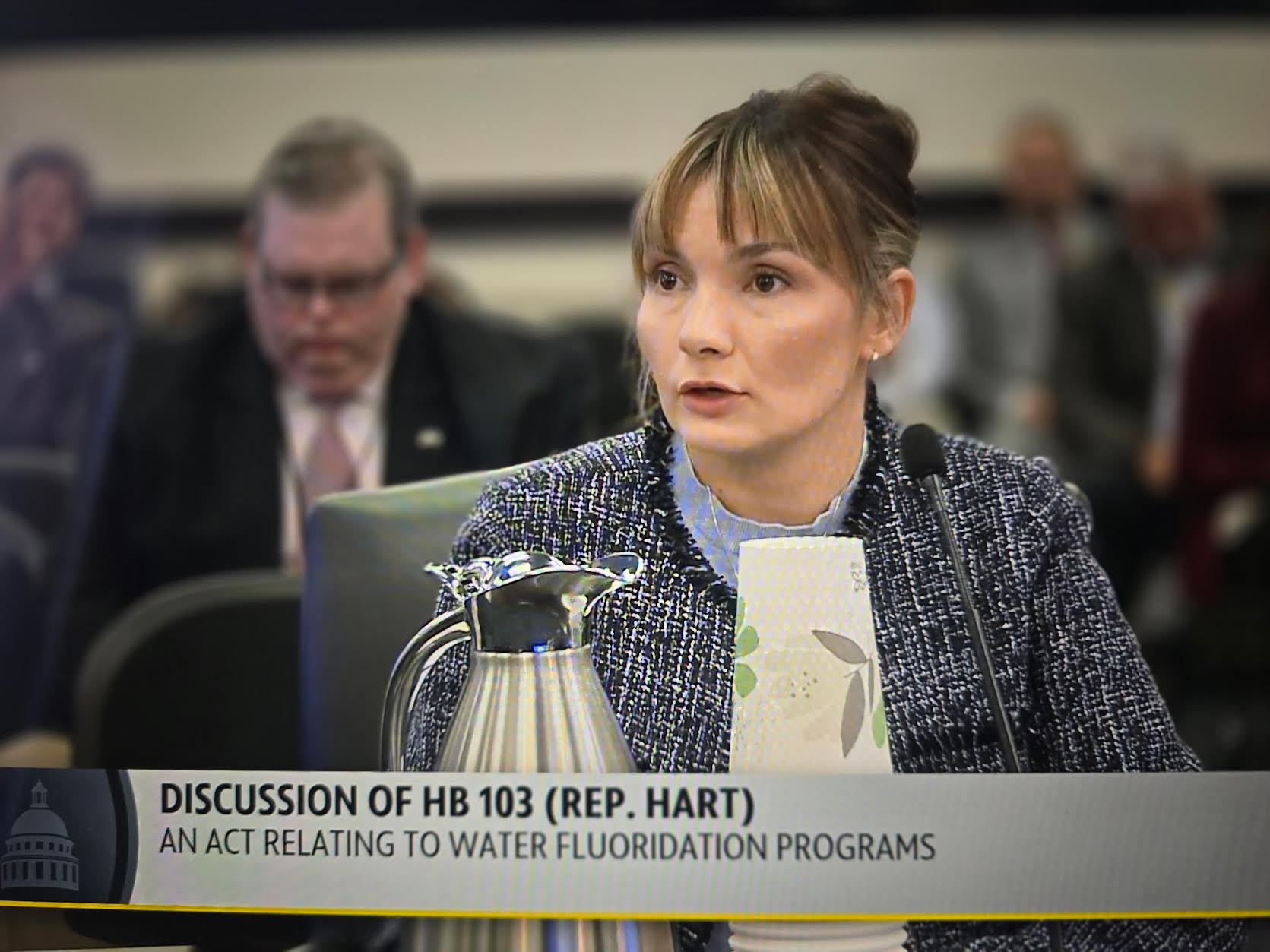
Brittany Elam speaks to Kentucky lawmakers in opposition to legislation that would make water fluoridation optional.
For the teams at Kentucky Voices for Health (KVH) and Kentucky Youth Advocates (KYA), advocating for better health outcomes for people in their state is nothing new. But in 2025 and 2026, the pace and scope of the policy challenges in their state ramped up dramatically.
In February and March of this year, advocates across both organizations found themselves confronting two major legislative proposals that could have significantly affected oral health and access to care in Kentucky:
- A bill to make community water fluoridation (CWF) optional
- A sweeping Medicaid reform proposal that included higher copays and stricter work requirements
“There was a lot moving at once,” says Cody Kemmer, Grants and Communications Coordinator with KVH. “Our role was really just to hit pause and say, ‘Okay, what’s the price tag? What does the rollout look like?’ We want to make sure lawmakers have the full picture before moving forward.”
With support from CareQuest Institute grant funding and peer support during OPEN meetings, KVH and KYA helped stop the fluoridation bill from advancing in the Kentucky Senate and successfully advocated for changes to the Medicaid bill proposal, including lower copays and fewer community engagement requirements.
“It feels like we’re finally starting to see progress,” Kemmer says.
These victories didn’t happen overnight. They were the result of months of persistent advocacy aimed at slowing the process down, giving lawmakers the information they needed to fully understand the costs, consequences, and practical implications of the proposed changes.
Keeping Fluoride in Kentucky Water
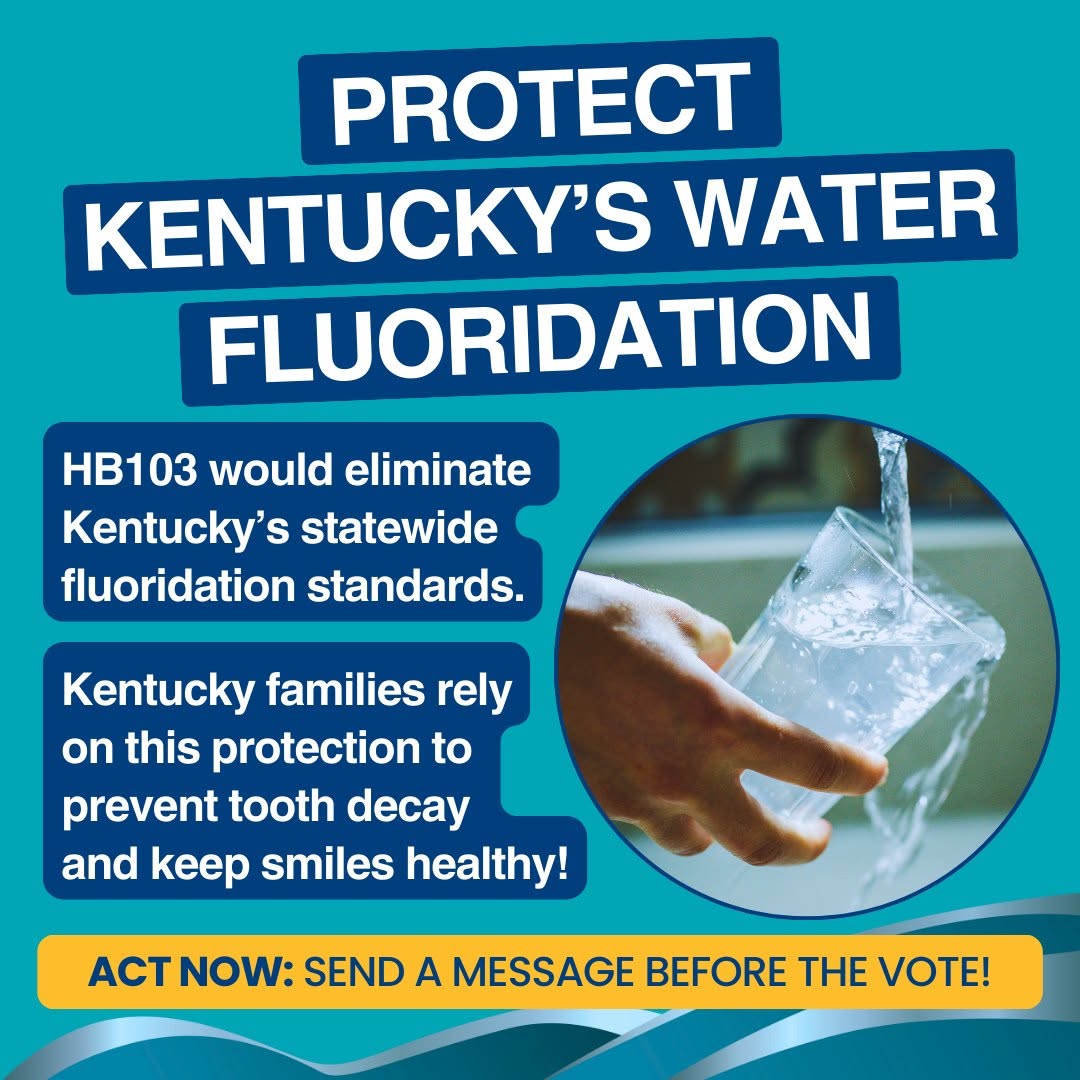
Since 2018, Kentucky lawmakers have repeatedly introduced legislation to end the state’s CWF mandate. Those efforts have steadily gained momentum, and for the second consecutive year, the Kentucky House passed a bill that would have weakened CWF requirements, despite more than 7,000 studies showing that CWF is a safe and effective way to improve health and reduce health care costs. The bill would have made CWF optional for local utility providers.
“Things are feeling more polarized, so we always have to stay ready with evidence-based advocacy,” Kemmer says.
To support that defense, in 2025, CareQuest Institute awarded KYA $100,000 to help protect CWF and advance strategic messaging that reinforces the safety and effectiveness of fluoridated drinking water for children and families.
The support has been invaluable, says Alicia Whatley, Senior Policy and Advocacy Director at KYA.
“Support from CareQuest is what made this work possible for the Kentucky Oral Health Coalition [part of KYA] through our policy advocacy grant work and a targeted grant to protect water fluoridation,” she says.
KYA and KVH are also members of OPEN, a diverse network working to make oral health care more affordable and accessible, particularly for underserved populations.
Brittany Elam, a Policy Specialist at KVH, found immense value in the network.
“The OPEN Community Water Fluoridation Learning Collaboratives were very helpful to connect with people in other states,” she says, “especially when there were bills with overlapping language or similar messaging.”
This year’s bill was framed as an issue of local control, allowing communities to decide whether to fluoridate their water. But advocates knew the bill had hidden costs.
To counter the proposal, KVH and KYA relied on research, cost analyses, testimony from community members who would be directly affected, and practical concerns about how the bill would be enacted.
Advocates also highlighted the financial consequences of ending fluoridation. According to CareQuest Institute research, Kentucky’s Medicaid program would face an estimated $6.3 million increase in costs after three years without CWF. And it would hurt access to care, particularly in rural communities, where dental care is already difficult to obtain.
“We don’t have enough dentists in the state as it is already,” says Elam. “When I testified in committee, that was the stance I took. This small bit of fluoride may be the only source of fluoride that kids and families are getting.”
Advocates found that message often aligned with what dental professionals were telling lawmakers — the fluoride was key to prevention.
“I talked to one legislator in particular,” says Elam. “And when I asked him about what was influencing his ‘no’ vote, he told me that he listened to his dentist.”
Ultimately, those efforts helped stop the bill’s momentum in the Senate, where it failed to advance despite its success in the House.
Protecting Access to Medicaid
While defending CWF, the two organizations were also working to shape a sweeping Medicaid reform bill. Designed to align with federal Medicaid requirements established by the One Big Beautiful Bill Act, the proposal included new community engagement requirements and higher copays for Medicaid enrollees.
“There were changes to the paperwork requirements and how often people would be run through eligibility determinations, which is an incredibly costly process,” says Emily Beauregard, Executive Director of KVH. “And then on the copay side, the first proposal legislators considered was to charge $20 for basically every service, $35 for inpatient care, and $5 for medications. Once we started talking about how copays lead to rationed care and would apply to patients with serious conditions like cancer, the conversation shifted.”
For KVH and KYA, the proposal created an opportunity to help lawmakers understand the real-world consequences of the changes. Advocates warned that additional paperwork requirements could overwhelm caseworkers and slow access to services, while increased barriers to enrollment could affect entire families.
“It’s simple to say these new requirements and the additional paperwork will only apply to able-bodied adults,” says Beauregard. “But we know in reality that it does the same for everyone else.”
Through testimony from community members, and ongoing education efforts, KVH and KYA helped moderate some of the bill’s most concerning provisions.
“In the end, we were able to get those copays down to $5 for most services and $1 for prescriptions,” says Beauregard.
In addition to lowering copays, KVH and KYA also successfully advocated to preserve self-attestation for certain circumstances.
“You don’t get a deed that says you have no home, and there’s no pay stub that says you make $0,” Beauregard says. “Preserving self-attestation is a lifeline tool for thousands of the most vulnerable Kentuckians.”
While advocates raised concerns about several provisions of the Medicaid reform bill, one part of the bill they saw as meaningful progress was a provision that will transition Kentucky’s Medicaid dental benefit from a Managed Care Organization (MCO) model to an Administrative Services Organization (ASO) model in 2029, shifting responsibility for administering benefits from private insurers to the state. They didn’t want to lose that potentially positive reform.
“If a piece of a bill seems promising,” Kemmer says, “we want to build on that instead of just pushing back.”
Although KVH and KYA helped protect CWF and softened proposed changes to Medicaid access in their state, both organizations know these issues are likely to resurface in the near future. And they are planning to continue to advocate for policies that improve oral health and access to care for all Kentuckians.
“The conversation doesn’t go away — it just changes,” says Kemmer. “We want to make sure we’re at the table.”
Learn more about CWF in Kentucky and consequences of lack of access to care for Medicaid enrollees.