
Less than 24 hours after attending a webinar on de-escalating challenging situations, the lead dental assistant at a Michigan dental practice found herself in one.
“It’s uncomfortable,” says Meredyth McLaughlin at Calm Care Dental in Michigan. “No part of our job necessarily prepares us for verbal assault or someone pushing back on standard office practices.”
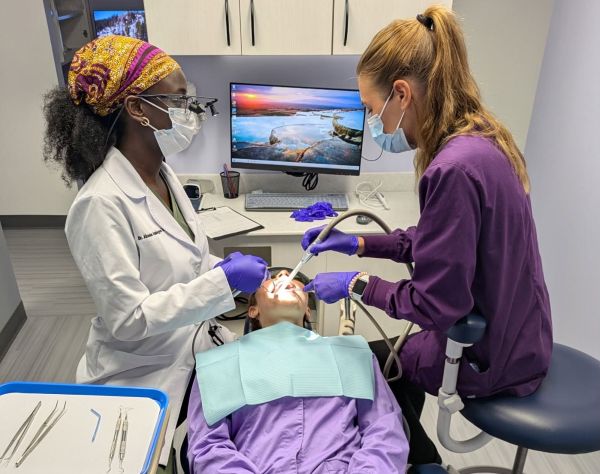
Photo from Calm Care Dental
McLaughlin and her former colleague, Felicity Thurmond, a dental receptionist and assistant in training, attended the recent CareQuest Institute webinar, “Prevention and De-escalation Strategies for Challenging Patient Situations.” During the webinar, Adrienne Gerken, MD, of Thomas Jefferson University Hospital; Athanasios Zavras, DDS, MS, DMSc, of Delta Dental of Massachusetts and Tufts University School of Dental Medicine; and Alisa Lewis, Senior Director, Governance, Risk, and Compliance at CareQuest Institute, shared strategies for recognizing signs of escalation and using communication techniques that foster safety and trust.
“I really enjoyed how Dr. Zavras provided visual perspectives of people on the spectrum who may experience extreme anxiety,” says McLaughlin. “That was very helpful.”
She didn’t realize just how helpful the webinar would be until the next day.
Applying Lessons in the Office
McLaughlin was working at the front desk when a first-time visitor arrived wanting dentures.
“The person was edentulous and wanted dentures but refused the exam we needed to evaluate and provide treatment,” McLaughlin says.
Before providing dentures, a dentist needs a complete picture of a patient’s oral health, including the condition of the jawbone, gums, and surrounding structures. X-rays help identify potential issues and ensure the safest and most appropriate treatment plan.
As the conversation continued, the visitor became increasingly frustrated. That’s when McLaughlin found herself thinking back to a slide from the webinar outlining de-escalation techniques.
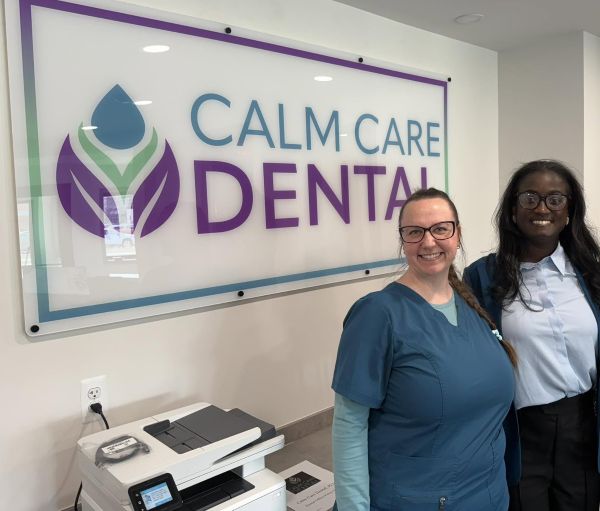
Meredyth McLaughlin and Dr. Akosua Appiagyei
“I was realizing the visitor wasn’t going to listen to anything I had to say,” she says. “I went back into those ‘I’ statements and kept repeating, ‘I can understand why that would be frustrating, but this is office policy.’”
Rather than matching the visitor’s frustration, she focused on acknowledging their concerns while calmly explaining the reason for the office’s requirements.
After she made several attempts, the individual ultimately decided not to move forward with the exam and left the office without becoming a patient.
For McLaughlin, the experience reinforced an important lesson: De-escalation isn’t just about helping the other person remain calm; it’s also about managing your own emotions.
“I noticed that the intense anxiety that I’m sure every human feels in those situations was much less because I felt like I had more tools in my toolkit than I normally have,” she says.
Building Trust from the Other Side of the Chair
Challenging patient interactions, the webinar speakers noted, don’t have just one cause. The anxiety and frustration patients feel can stem from many different sources.
“Sometimes it’s financial,” McLaughlin says of her experience. “Sometimes it’s pain. Sometimes it’s not understanding their own insurance or how insurance works.”
Thurmond, meanwhile, understands those fears firsthand.
Before joining Calm Care Dental, she spent months living with tooth pain but delayed treatment because of her anxiety. One procedure, in particular, terrified her.
“My biggest fear was a root canal, and I know I needed one, and I had gone months without it, doing at-home remedies and not eating on that side of my mouth,” she says.
As she watched the dentist at Calm Care Dental interact with patients, she noticed something that had been missing from her previous dental experiences: trust. After about two months, she felt comfortable enough to become a patient herself.
“She got me in to do some X-rays, a root canal, and a crown, and now I’m eating on this side,” she says. “I don’t have that pain anymore.”
For Thurmond, the experience reinforced the importance of creating a safe and supportive environment for patients. That’s one of the reasons she attended the webinar.
“When you come across a dentist who makes you comfortable, listens to your concerns, takes your finances into consideration, explains everything, and is willing to take the time to work with you, you stick with them,” says Thurmond.
Her own experience with dental anxiety has also shaped the way she approaches patient care.
“Knowing how I would want to be spoken to if I have extreme anxiety or am panicking helps me know how to treat a person with extreme anxiety,” says Thurmond. “Seeing patients leave happy, pain-free, and excited for that next appointment made me want to experience it for myself. And now, I got me a new dental home.”
Editor’s Note: View all our webinars in CareQuest Institute’s webinar library