
As we enter 2026, we recognize the increasing urgency of our unique work. Simply put, it’s a year unlike any other we’ve seen.
Why?
Access to oral health care — and the proven prevention strategies that support it — are under mounting threat. State legislators are likely to cut Medicaid adult dental benefits as one of the first casualties of state budget shortfalls. While lawmakers may frame these cuts as short-term cost saving measures, they merely shift costs to already overburdened hospital emergency departments and fail to address the underlying causes of oral pain and disease. The result, for all of us, is worse health outcomes, higher system costs, and deeper inequities.
We believe this is unacceptable, fiscally irresponsible, and an inefficient use of public resources.
Our priorities for 2026 reflect this reality: The CareQuest Institute Philanthropy team is focused on building practical tools for organizations across the country, elevating oral health care as a public health and equity necessity, and accelerating prevention-focused solutions that protect communities from oral health problems.
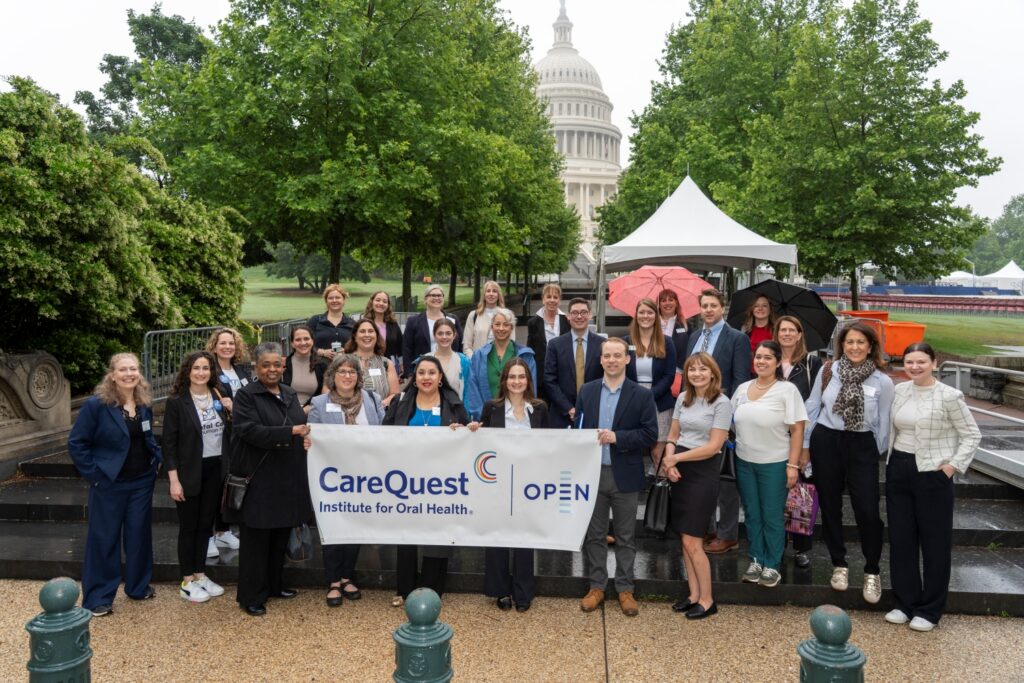
OPEN members participate in Hill Day 2025.
Community Water Fluoridation, Coalitions, and Collective Action.
- Community water fluoridation (CWF) remains a cornerstone of this work. It’s one of the most effective evidence-based public health interventions available — and one we must defend at the national, state, and local levels. At the end of 2025, CareQuest Institute awarded 14 rapid-response grants to partners working on the ground in states where CWF could be restricted or outright banned. In partnership with our Policy and Advocacy team, we are actively monitoring legislation, connecting with coalitions, and providing technical assistance in high-risk states. We are also supporting partners on this topic through OPEN’s CWF Learning Collaborative, which is dedicated to protecting access to CWF.
- History reminds us that moments like this demand collective resolve, coordinated action, and an unwavering commitment to oral health equity. To meet these challenges, we are partnering with the American Network of Oral Health Coalitions (ANOHC) to provide leadership development, technical assistance, and shared resources to state and regional coalitions. These coalitions are often the first line of defense against policy rollbacks and emerging threats, but they are increasingly stretched thin. By investing in coalition capacity (for example, learning sessions and the creation of a capacity assessment tool), coordination, and leadership, we aim to combat fragmentation, strengthen shared strategy, and ensure advocates are equipped to respond swiftly and effectively.
- This commitment to collective action will come into sharper focus during OPEN Hill Day, June 3–4 in Washington, DC, when advocates from across the country come together to talk to lawmakers about the need for policies that expand access to care and protect public health investments. Hill Day is more than a convening; it is a powerful reminder that when we align data, lived experiences, and shared values, we can influence decisions that shape oral health outcomes for generations. Following dozens of productive meetings with members of Congress and their staff during Hill Day in 2025, as well as training in advocacy best practices, OPEN members are motivated to make policy impacts that will reverberate for years.
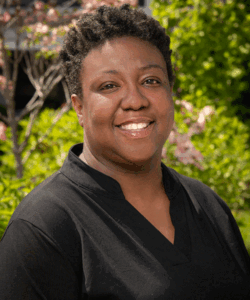
Trenae Simpson
The year ahead will require courage, collaboration, and clarity of purpose. We are grateful to stand alongside partners, grantees, and advocates who are rising to meet this moment. Together, we will continue building the tools, relationships, and momentum needed to protect hard-won gains and to advance an oral health system rooted in prevention, equity, and community well-being.
Authored by Trenae Simpson, Senior Director of Philanthropy, CareQuest Institute